Showing posts with label Pumpkin. Show all posts

Saturday, October 17, 2015

5 Tips on Brewing Pumpkin Beers from Elysian Brewing Co.

pumpkin homebrewing tips


Elysian Brewing Co. loves their pumpkin beers. The Seattle-based brewery produces and bottles four pumpkin-themed beers annually—Night Owl pumpkin ale, The Great Pumpkin imperial pumpkin ale, Dark o’ the Moon pumpkin stout, and Punkuccino coffee pumpkin ale—as well as various other tap-room offerings that showcase the orange gourd. They also hold their annual event the Great Pumpkin Beer Festival, now in its tenth year.
We caught up with Elysian founder Dick Cantwell and head brewer Steve Luke to ask for some tips on brewing beer with pumpkin. Here’s what they shared.

1) Use pumpkin throughout the brewing process.

Using pumpkin in a pumpkin beer may seem too obvious for tip #1, but there are “pumpkin beers” out there utilizing only spices to trick the senses into perceiving pumpkin. Ideally, pumpkin should be evident in both flavor and mouthfeel.
For the most pumpkin-like profile, pumpkin can be added during the mash, boil and even in the fermenter. “For additions to both the kettle and fermenter, keep in mind that pumpkin has a lot of water—single-strength pumpkin is typically around 8 brix—and should be liquefied with wort rather than more water, since you don’t just want to plop it in un-thinned or have it negatively affect the your starting gravity,” says Cantwell. “You may need to use more malt to hit your target gravity.”
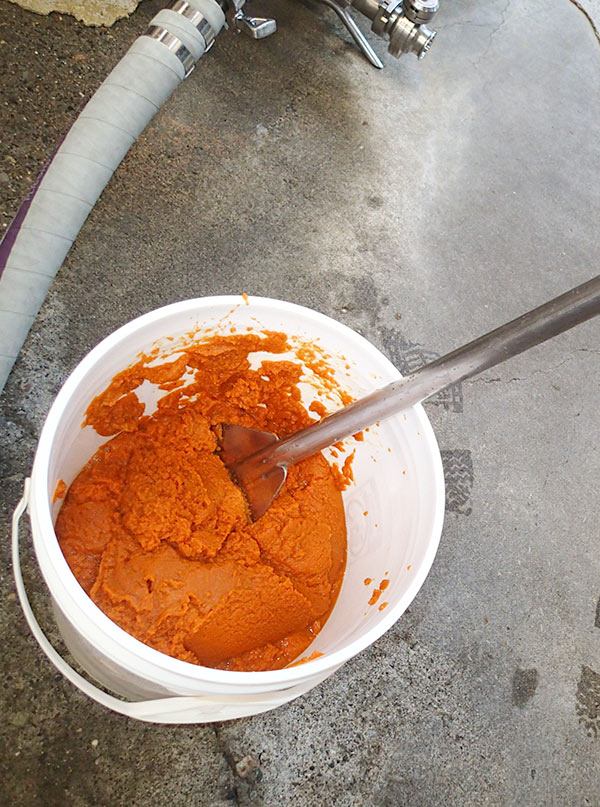
pumpkin homebrewing tips

2) Control your spice regimen and think outside the (spice) box.

When using spices in conjunction with pumpkin, pre-blended pumpkin pie mixes are available at stores, but for the most control you’ll want to add spices individually. Elysian uses what they call the “faithful 5″ which include cinnamon, nutmeg, allspice, ginger and clove. Sure the pre-blends can work, but to tailor the spice regimen to your specific recipes, pull a sample after fermentation as you near conditioning and try different spice ratios until you find what works well for your recipe.
“At Elysian, we’ve also used dozens of different spices in our pumpkin beers—vanilla, mace, dill, lavender, cumin, coriander, epazote, different chili varieties, etc.—but not all at once…that would be gross,” shares Luke.
Cantwell emphasizes thinking outside the spice box and exploring spices in world cuisines that use pumpkin, like certain Mexican and Indian dishes. Take the time to experiment with different spice additions prior to conditioning. You may be surprised what you’ll favor!

3) Experiment with other non-spice ingredients.

Pumpkin beers don’t require additions of cooking spices to add more depth and character. Other ingredients can be used to create spice-like qualities, like phenolic, fruity and clove-y yeasts as well as a gamut of flavor-commanding microorganisms.
Various fruits and vegetables can also compliment pumpkin, like sweet potatoes, yams, zucchini, squashes and even cucumber. Bigger pumpkin beers lend themselves to aging in barrels of all types.
“One of our favorite pumpkin beers, brewed by Silver City Brewing in Sliverdale, Wash., is made from pumpkins smoked on a steel drum smoker,” shares Cantwell.

4) Stray from the traditional pumpkin ale style.
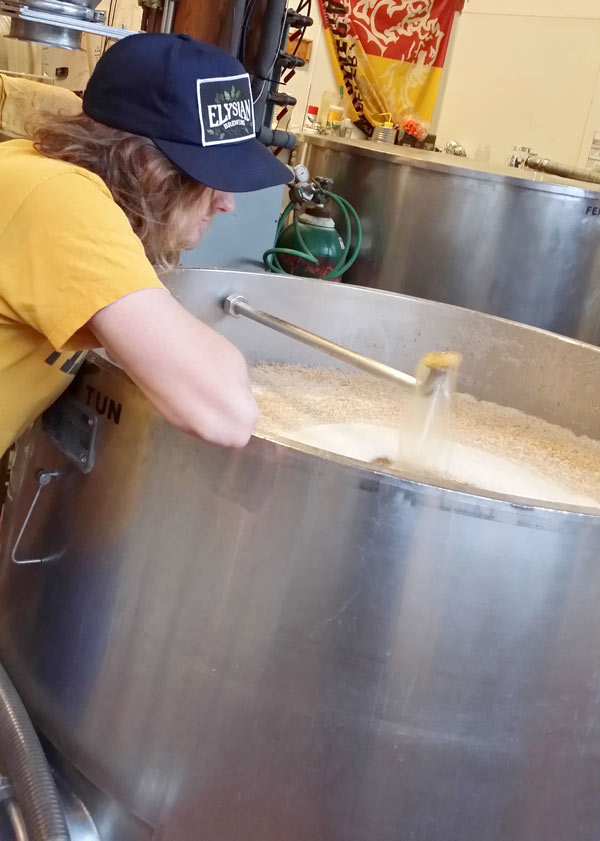
pumpkin homebrewing tips
Elysian head brewer Steve Luke watches over the sparge of a mash with pumpkin.
Moderately hopped and spiced, amber-colored ales with a bit of maltiness tend to be the benchmark for the pumpkin beer style. However, pumpkin can be added to a much wider variety of beer styles with great success. It will not always be as easy as adding pumpkin to your favorite recipe, though. Consider what further additions are suggested to tie the pumpkin in with the style you pursue.
“Cucumber-pumpkin beer cries out for dill and Sorachi Ace, Saaz-laden pilsner for the spice and heat of ginger, chocolate pumpkin beer for orange or chilies or cinnamon,” says Cantwell. “This year we’re going to brew a pumpkin Sahti with juniper-infused brewing liquor and whole juniper branches in the mash.”

5) Serve your beer in a pumpkin.

You heard us right! Many commercial and home brewers, including Elysian, are taking pumpkin beers to the next level by serving them from an actual pumpkin. The process is fairly simple. First hollow out a pumpkin. Then take a welding torch and scorch the interior of the pumpkin until it is black. This helps mitigate the astringency of raw pumpkin, while the caramelization simulates the char of a bourbon barrel. After filling it with beer, seal it shut with beeswax to allow for flexibility since gourds swell and contract.
If you do pursue this “pumpkin keg,” Cantwell suggests kicking the keg within two days. A pumpkin is porous and the beer will begin to depreciate after a day or two.

Thursday, October 1, 2015

How to Brew an Excellent Pumpkin Ale - Some Tried and True Tips

Yes, it's that time of year again - when it seems like half of the homebrewing population is debating the best way to brew a good pumpkin ale (often with little to no firsthand experience on the subject), while the other half is suggesting that the first step to enjoying a pumpkin ale is to pour it into the closest drain. And of course, craft beer outlets everywhere are inundated with pumpkin offerings of varying quality, which likely encourages the trend even more.

Rather than take a side on that debate, the following article is presented as some tried and true suggestions to follow if you find yourself wanting to brew a pumpkin ale. After all, if you're going to do one of these beers, do yourself (and anyone you share the beer with) a favor, and make a good one!

Interestingly, it seems that many brewers are adamantly opposed to using actual pumpkin flesh in their beers, feeling that doing so doesn't really offer anything to the beer and just makes a mess. Instead, they rely on their spice mix to invoke that signature pumpkin beer flavor.


Pumpkin ale - image courtesy of Google image search


As an avowed advocate of using actual pumpkin in pumpkin ales, I have to say that the idea that actual pumpkin contributes nothing isn't true at all. Once I first brewed my pumpkin ale, I spent the next five years perfecting the recipe, and have brewed it every year for the past fifteen years. I notice a very significant difference between pumpkin ales with actual pumpkin and those without it; you just have to know how to treat the pumpkin right.


A few tips for anyone interested, both generally about brewing pumpkin ales, and specifically about how to get the best flavor our of real pumpkin:

1. Always use pie pumpkins. I have found that a large majority of people who insist that using real pumpkin doesn't add anything to a pumpkin ale don't use the right pumpkins. Most varieties of pumpkins -- and particularly the standard jack-o'-lantern pumpkins that are everywhere in the fall -- have almost nothing in the way of any desirable flavor or sugars. Pie pumpkins, on the other hand, have been bred for culinary uses. They're sweet, and spicy, and a little nutty. They have more in common with butternut squash than they do with jack-o'-lantern pumpkins. If you can't get them, then there really is no point to using real pumpkin.

2. Use fresh pumpkin. This one isn't a concern for flavor, but it makes a huge difference logistically. Pumpkin puree is gloppy, gluey, sticky stuff. It's great if you're making a pie, but tossing it in your mash or your boil is a nightmare. You have to wait longer to start your beer if you're using whole pumpkins, but it's more than worth it in my mind.

3. If you want some 'gourdy' flavor in addition to the flavor of cooked pumpkin and pumpkin pie, start with pumpkin in your mash. Cube about a pound or two into roughly one inch sections, par-boil it, and toss it in at dough-in. Personally I don't use this method, but people who enjoy the raw pumpkin flavor should do so.

4. I prepare my pumpkin for the boil by cubing it (again, roughly in one inch sections) and baking it until it is well browned. Usually this takes about an hour at 375° F, tossing the pan every fifteen minutes or so for even caramelization. After it's browned, I toss it with a mix of brown sugar, a little bit of water, and some spices, and put it back into the oven for about ten minutes. It's almost like you're making caramel corn. After that, I toss the pumpkin into the kettle at the start of the boil and let it go for the full hour. Some people insist that this is a bad idea because it will give you cloudy beer -- and you should only use pumpkin in the mash to get the starches converted -- but I've never found this to be true.

5. The spices. This is incredibly important. Most of the changes I made while I was still developing my recipe involved getting the balance of spices right, both in the actual spice blend and in how much to add to the beer. I like a spicy pumpkin ale; I add a tablespoon of my spice mix at burnout. This is more than most people use, and if you've never brewed a pumpkin ale before, you may want to start with less. You can always brew a spice tea and add it when you bottle or keg if you find that you want more spice character.

6. Secondary. People do it all the time with fruits, but they never think to add pumpkin in secondary. I've only heard of a handful of other people doing this, but if you really want to see the benefits of using real pumpkin instead of just pumpkin pie spices, you need to do this. Take two to three pounds of finely cubed (roughly half inch pieces) pumpkin, caramelized as before in the oven, then candied with some molasses and maple syrup in a pan on the stove. Leave it in the fermentor for about a week, then transfer straight to the bottle or keg.

7. One more thing. Keep your IBUs down. I've seen pumpkin ale recipes stretching into the 30-40 IBUs range, which is way too high in my experience. My recipe sits at 13 IBUs, as I've found that when you go much over 15 or so, the hops start to clash with the spices.

My personal pumpkin ale recipe follows below. The site's formatting means that you'll need to view the recipe page for full details on the spice blend, the mash temps, and the other recipe details.


Batch Size (gallons) 5
Efficiency 75%
Recipe type All Grain
Style 21A. Spice, Herb, or Vegetable Beer
Original Gravity 1.057
Final Gravity 1.014
ABV 5.64% (basic) / 5.64% (advanced) [what's this?]
IBU 13
Color 14 SRM
Boil Time 60 min

Yeast Wyeast 1056 (American Ale)

Fermentables
Name Amt Pct SRM
Pale Malt, Maris Otter 8 lbs 84.2% 3
Biscuit Malt 1 lb 10.5% 23
Munich Malt 8 oz 5.3% 9

Hops
Name Amt Time Alpha IBU
Fuggles (Boil) 1 oz 60 4.5% 13

for complete recipe (with details like mash and fermentation temps), click here